Showing posts with label Andie. Show all posts

Thursday, July 19, 2018

Dad

When I was 3, my mom remarried.


My siblings and I were the product of her first marriage. It ended before I can remember and was upgraded by a willing father figure and an older brother, and we were all much happier for it.

I remember the first time I called Danny “Dad”. He was backing out of the driveway and I called “bye Dad!!”; he slammed on the breaks and ran up with the biggest, goofiest grin on his face and asked, “What did you call me?” I thought I was in trouble until the threw me up in the air and caught me and spun me around.

Dad is a mechanic. At our house in Argyle, he had a shop that was a safe haven of warmth and sunshine and rock n roll. Mom banned music in the house except Christian and country, but looked the other way when Dad introduced us to AC-DC, Collective Soul, Queen. He would work on cars while I read manuals he didn’t need out loud to him, halting and faltering over technical terms. If I didn’t feel like reading, I crawled on the cherry picker and rolled around on the creeper, getting in the way and handing him tools. I loved the smell of fresh lumber, so he’d take me with him to Home Depot to pick out scraps for my projects. With a tennis ball cut in half and glued to a piece of sandpaper, I would smooth my little chunks of wood, hammered nails in crookedly.


Through Dad, I learned a lot about practical knowledge—how to work with your hands, finish what you start, use your manners, and be a good person. Danny had firm expectations of how we ought to behave and enforced them strictly, from coming promptly when called to proper table etiquette to respectful attitudes to everyone you meet, but he allowed a great deal of space for us kids to be individuals. He wanted us to think for ourselves, come to our conclusions on matters. When I asked him about baptism, he gave me a factual definition of it, explained how different denominations viewed baptism, and told me, “you can’t make this decision for anyone else. Not for me, not for your mother, not for your grandparents. Only you can know when you are ready and what you believe.”

I knew that Dad was sick. He hurt a lot, every day, especially after eating. Some days were worse than others. Still, none of us—even him—knew how bad it was until he collapsed while working out in the garage.

The doctor at the emergency room gave him a diagnosis and prognosis.
Hepatitis C.

Dead man walking.

They had little hope for Dad to get better. There was no cure, and by the time Dad was diagnosed, he had been living with it for ten or fifteen years. It had already scarred and damaged his liver horrendously. Several other doctors agreed, but Dad found a doctor that was hopeful.

I don’t know a lot about that time except as it affected me. Dad was in and out of the hospital with increasing frequency. Sometimes he would be gone for months, come back for a weekend and have to be picked up by the ambulance again. Several times our school bus would pull up with EMTs and a rig with flashing lights sitting in our driveway. We learned how to tell based on the paramedics’ behavior how serious it was.


They moved Dad’s bed to the dining room so we could spend time with him during the day, and so he could be close to the pot belly stove in there. He was cold all the time. His hands shook so much he couldn’t write. I had to have him sign an absent note one day because Mom had already left for work; it was so illegible, just scribbles on the paper, that they wouldn’t accept it and I hid in the band room to cry.

Mom was the sole provider for the six of us, so she worked from 6 am until well after dark. She spent nights at the hospital, came home to change clothes and go back to work. Royce or Jarrod would drive us up in the afternoons after school to visit—we’d sneak food from the family waiting room, read medical pamphlets, play games on the elevators, and generally pretend we were anywhere else.

A couple of times, the doctor would call us at home and tell us to come and say goodbye because he was vomiting blood. His blood transfusions were measured in the gallons. The toxins backed up in his body so he couldn’t see as he stroked my hair and told me he loved me; he had multiple brain bleeds, and his skin and eyes were yellow with jaundice.
It was a dark and horrible time for our family. There was a complete and utter dearth of hope. None of us expected it to get better.


And then...it did.

Three in the morning September 11, Dad called to say he was getting a liver transplant.

I remember sitting up there all day, waiting. Mom had to watch this outdated video about liver transplants; I can’t imagine it offered any useful information. When he came out of it, he had a huge incision shaped like a wishbone, down his chest and splayed across his ribs. With a functioning liver, he was nearly half the size he was before—he looked so small and fragile and happy, standing up for the first time in a long time, with wires and tubes and monitors attached all over his body.

That was 15 years ago. Since then, he has had to take anti-rejection medicine that suppresses his immune system and allows his new liver to reside unimpeded in his abdomen. An experimental treatment brought his hep-C viral load to zero, but it was free to scar his new organ for ten years before it was stopped.

Dad was having trouble lately and went in for testing, which is how we got a new diagnosis for him: liver cancer. There were a lot of questions surrounding it, a lot of tests to be run because the tumor wasn’t acting like it was because his immune system is suppressed. He was supposed to undergo six months of chemo. If it was successful, he would qualify for another transplant.

The cancer could have been caused by his former illness or his anti-rejection medicine or some weird combination of both.

It felt like the transplant pushed the “pause” button, and someone pushed play again. Delayed pain—it didn’t go away, it was just put off. This hit us all in a very sensitive place of our hearts, a door we had quietly closed and tried hard to not look in.

My heart hurt for Dad though. He hates the hospital, says he’s been inside enough for one lifetime. I did as I had before—my best to keep him in good spirits, to keep him company like when he was working in the shop all those years ago.

We were hopeful—we had a plan, it was hard, but we did it before and we could do it again. His condition was causing him to retain fluid so he had to undergo a simple procedure to drain it. The wound got infected with MRSA, which became septic, and was rushed to Baylor hospital. As before, we gathered around him and tried to keep track as different specialists, those concerned with his liver, kidneys, cancer, transplant, or infection came through the door and each gave us part of the puzzle. We weren’t able to piece together all the information to make a clear picture, didn’t know how optimistic we should be, how much we should prepare ourselves.


After several days, he was released home on hospice with liver and kidney failure.

Last week, he got another infection and his condition deteriorated rapidly. Once more, family gathered to pray and hunker down in the storm. It became more and more clear that there wasn’t going to be another 3 am miracle phone call, no more pause button.

Dad passed away yesterday morning. He was fifty-five.


It is hard to explain how it feels. Part of me is...grateful. Thankful that we got another 15 years (and ten days) with him. That God answered his prayer from 2003 to keep him alive long enough to meet his grandchildren—all ten of them. That he isn’t in pain any more, because he was in a lot of pain all the time.
As grateful as I am for all of that, it still hurts. A thousand things a day make me think of him—fruity pebbles (which he would never share with us) and hole-in-the-wall Mexican food, low-budget science fiction, classic cars and classic rock, and 100-degree days. He knew what he liked and what he didn’t and was quite vocal about it. I haven’t much experience with death. I don’t know if I should avoid those memories so I can keep moving forward, or if I should immerse myself in them. Make a big bowl of Spanish rice so spicy it brings tears to my eyes, crank the thermostat up to 80, and watch reruns of M*A*S*H* and just cry for the man that chose to be my father.


Benjamin and Dad had a special bond, forged out of common interest (eating candy or spicy food, watching monster cars, and working outside) and a shared loneliness. Helping Ben through this has been the hardest part—his behavior problems and frequent outbursts. He doesn’t understand and he’s so sad and so angry. I feel like I’m leading him blind because I don’t know how I’m supposed to go, so I don’t know how to guide him through it.

So I tell him what my dad told me:

Dad was best in times of crisis, particularly after there had been a death in the family. He told me, “however you feel is okay. If you want to cry, that’s okay. If you want to laugh, that’s okay, too. There is no right way to mourn; you have to go through it the way that feels right to you. And Andra, I’m so sorry you have to go through it.”

--Andie

Thursday, June 14, 2018

Life Skills


Summer is a long time to have the kids at the house.

For two months, I have to keep this pack of malcontents docile and entertained. There is so much pressure in summer—pressure to have fun, make memories, go to new places and do new things. I don’t want to go new places and do new things. Honestly, I just want to survive. We have so much already going on that we are in essence tied to the house.

My thought was: how do I make the most of this limited time I have with the kids so that they are engaged?

I have long advocated that kids learn important life skills before they leave home for college. Part of this was spurred on by watching the college episode of “Chopped”. While I was not expecting these four pre-adults to be masters in the kitchen, I was filled with abject horror while watching round after round of frankly inedible slop being served because of simple cooking errors. My own trial run at self-sufficiency had its own hiccups, a fact my parents gleefully relive as they remember the time I called for instructions on boiling an egg.

There are so many instances you run into as an adult that you feel poorly prepared for--things like applying for school loans or getting your first apartment, filling out applications, managing a household. These are unavoidably adult undertakings that can positively or negatively impact the success your first few years out of the house.

With this in mind, I decided to make this a summer of Home Camps that teach life skills.

There are few (unofficial) experts I have called in for reinforcements. My mother is doing a bi-weekly baking camp. Last week, she taught all the Abilene grandchildren that are old enough to be taught, a group of six ranging in age from 2 to 10, how to make homemade bread. The two smallest, Clara (3) and Maryn (2) were not able to grasp some of the deeper concepts but they were able to help mix and measure, pour and knead. They were all so proud of the product of their work, which engaged them for several hours and yielded four loaves of bread, a dozen rolls, and a braided loaf.

It was Mom’s week off so I used the time to teach my own how to make communion wafers so that we could discuss the significance of the unleavened bread. I believe it was only slightly sacrilegious that I allowed the children to mold them into cat shapes with the cookie cutters.

Next week Mom is coming to show them how to make apple butter and pumpkin butter, how to peel and slice and can. Maybe we will do crackers or rolls to spread the delicious product on; we will see.

My brother Jarrod has also contributed a higher skill: reading and signing a contract. He is going out of town and needed someone to care for his pets while he was away; he made Emerald apply and interview for the position, then drafted a simple contract for her to read over and sign, making sure to note that as she is not yet of age that her parents had to sign as well. I am hoping to engage him for a robotics course later in the summer as well.

Cousin Jessica, who is a talented artist, has (schedule allowing) agreed to come do an art camp one day with the kids, and Cousin Justin is going to teach horseback riding while we are in that area.

Most days lay more firmly in my domain, however, and so I have written down a list of skills that I would like to see them master and have crafted lessons around teaching them.

One that shouldn’t be a thing but you run into it more than you think you would: making a doctor’s appointment.

Telephone etiquette, overall, is an often overlooked but crucial, dying skill--how to listen without interrupting, polite tone, not nodding when someone asks you a question (seriously, why do they do that? Do they think they are on FaceTime?). Making and keeping appointments is important. Especially for September birthdays, you can’t call day-of or week-of and expect to get seen. You have to plan and schedule ahead, get your spot claimed early because a flood of students are going to be getting their well-checks and sports physicals.

My sister Amber works at the doctor’s office where our children are seen, so I called her and gave her a heads up. Then I coached Emerald through--looking up the number, listening to the automated system, speaking clearly and at an appropriate volume, saying please and thank you, answering all the questions. Afterwards, I showed her how to add it to the Google family calendar so that she could remember it in advance and we could all see it when making other appointments.

Another important skill: Cleaning.


It was kind of a revelation to me when I realized that my definition of clean and the children's’ was vastly different. Mine was “everything is picked up and put in its place”; theirs, “there is a clear walkway”. To them, it didn’t matter how much stuff was under the furniture or up against the walls or on top of surfaces, as long as you could walk through the room without stepping on things.

My mother had been pestering me to watch Diane from Denmark who cleans by a popular system called “Zoning”. Basically, you divide your house into six manageable areas. Each day, you clean in that one area and that one area only. On the seventh day, you rest!

Just kidding. There is no rest. There is only more mess.

On the seventh day, you clean the whole house. But the goal is 80% clean, 80% of the time, which means that on that final day you shouldn’t have too much mess accumulated.

We are trying the zoning system combined with another cleaning trend: the power hour. For one hour, and one hour only, you clean as hard as you can in that one area. After that hour is done, it doesn’t matter if you have anything left, you are finished. Michael particularly likes this because it sets a tangible end goal that isn’t “perfection”. Our zoning goals are:

Sunday: Yards
Monday: Bathrooms
Tuesday: Living Room/Playroom
Wednesday: Bedrooms
Thursday: Kitchen/Dining Room
Friday: Entryway/Hallway/Laundry Room
Saturday: Big Cleaning Day

I am not going to say much on that at the moment because we have only instituted it for a week so I cannot yet speak to its efficacy, but I will let you know more later on.

But during that time, I show the kids what you need to know--how to dust, avoid mixing chemicals or using too much, how to sweep and mop and load a dishwasher properly. It is somewhat slow going. My mind keeps saying “it would go so much faster if you did it…”. I have to keep reminding myself: if I don’t want to be the only one doing this forever, they have to learn it. With that spirit in mind, they are also helping do laundry, beginning to end.

Other life skills I have been working on teaching them:

Basic first aid and what to do in an emergency
Gardening and yard work
Grocery lists, meal planning, reading labels
Simple sewing
Letter writing, gift wrapping
Basic car care--how to wash a car, put in fuel, check fluid levels
Finance--how to make and stick to a budget, write a check, tithing

They are learning a lot and having fun doing it. We make a lot of time for entertainment-only pursuits, too. Days are very long in the summer so there is a lot of time to fit in everything, and we don’t have to have a lesson every day. Most days we wake up and eat breakfast, then go for a walk while it is still not too warm. Then we sit in the backyard and do devotional. They play while I do some writing or cleaning or working on whatever I have going at the moment; at the end, I have them come help clean as well--their power hour is only actually about thirty minutes because I have found you can get them to work really hard for about that long before they lose interest. Then there is lunch; afterwards, the younger kids go down for nap while Emerald and I have our bonding time. Afternoons we go our own way and do our own thing until Michael comes home and from there the day starts its steady downward slope toward bed.

It is important that I work as well to better myself, so to that end I am trying very hard to work on improving my temper and patience. Life gets so very frustrating and overwhelming when you feel like no matter how hard you try, you are falling behind. This diet can be discouraging--our choices feel so limited and prep time is outrageous. We eat five to six times a day: three major meals and two (to three) substantial snacks, and each time it requires nearly an hour of prep. I can’t make things in advance because Gabriel will find and steal them, like the homemade toasted almond granola bars I made for Sunday morning breakfast. He ate two dozen of them while we were sleeping. It was very frustrating.

Michael’s grandmother, Grannymom, gave me a lot of books that have actually helped with that. One of which Michael and I are reading together: “Don’t Sweat the Small Stuff...and It Is All Small Stuff”. It gives practical and insightful advice like developing your compassion, allowing yourself to be bored, and practicing patience. Every day, I try and focus on attempting a new skill to soothe my ferocious temper and low tolerance for annoyance.

I think we are getting better. More and more of our day feels smoother, kinder. The kids’ bodies and minds and spirits are being fed, and it shows. They aren’t acting as desperate for attention, their attitudes toward one another are softening.

And I feel, just for a brief moment, like maybe...we can survive this summer.


--Andie
(Rare Post Script: If you have a skill you would like to teach at Home Camp, let me know!!)

Friday, June 8, 2018

Modified Diet

Tula had been getting these weird rashes on her face.


All of my kids have sensitive skin—they don’t burn in the sun, but their cheeks turn a bright lobster red from any amount of time outside. They have all (except Benjamin) had patches of eczema that come and go since they were babies, and we have had to be diligent about which sunscreens, soaps, lotions, and creams we use on them so it does not cause irritation. Tula’s occasional reaction was interesting, but not necessarily of note.


At first, I thought it was just teething rash. The other three would get a little contact dermatitis when they ate, so it could be that, too. I had learned that if you washed off their face and hands, it would pass after about a half hour or so.


Tula’s was more persistent though, and had the distinct white center indicitive of hives. Each time, it would get a little more wide spread—it started with just around her mouth, then blossomed out to her cheeks, around her eyes. The whites of her eyes turned red and she would scratch at them. Her nose would run, and she would sneeze and cough as her little nails raked paths across her skin.


I kept a food log and noticed when it happened:


Scrambled eggs.

Chocolate chip cookie.

Cheetos.


I had been off of dairy while nursing her because it caused such intense distress in her—as a new infant, she spent hours and hours screaming in the evenings until she fell asleep out of sheer exhaustion. We tried activated charcoal and medicine for acid reflux, but the only positive change happened when I finally cut out all dairy. It was missed, but worth it when our evenings started passing uneventfully.

Originally, my intention was only to nurse for the first six months. When that came and went, I decided to supplement until she was on more solid foods. At nine months, still getting the primary bulk of her nutrition through me, she was diagnosed with Type 1 Diabetes; nursing was such a comfort to her through that difficult time and through blood sugar crashes that I pushed back the timeline to a year.

One year, and then she would be officially done.

Around that time, my good friend brought me farm-fresh goats milk to try. It felt like a safe bet. Many people can do goats milk when cow milk does not treat them right. I gave T a bottle of it, which she sucked down, smacking her lips and saying “mmmm! Ahh! Mmmm!”


I felt like I saw the light at the end of the tunnel. This baby would not be nursing forever.

Turning around to check on her, she has the most widespread and severe rash she’d had yet.

Alarming as it was. she wasn’t wheezing, so I called the nurse to get dosing on Benadryl and made a note to bring it up a Tula’s one year check-up in a few weeks. From there, we got a referral to an allergist here in town for testing.

Using a back-scratch year, allergist determined Tula was allergic to eggs, milk protein, and soy. We will have to undergo further testing in the future, but we have to eliminate all three from her diet for the time being, including their presence in baked goods.

Which meant that I, who (despite my best intentions) is still nursing her several times a day, would have to modify my already limited diet as well.

I get questioned on my vegetarianism a lot, particularly in this state where it seems to be a lifestyle incomprehensible bordering on deviant.

March 2015 was when I stopped eating meat. Starting out, I was classified as ovalactopescatarian because I still ate eggs, dairy, and fish, but as of this actual post I am functionally vegan.

It started out as curiosity more than anything else. I wanted to know:

Would this help me with my migraines?

I vividly remember the first time I experienced a migraine. I was about seven years old, in the second grade. Mom sent me to lay down on her bed at the back of the house, away from the noise. The sink in the master bathroom had a leak that would drip, drip, drip. Each little droplet of water that splashed in the basin felt like it landed on my temple like a lead bullet, drilling deeper and deeper into my skull. My vision blurred a sharp contrast between the light and the shadows. Everything looked like it was vibrating and pulsating, this nightmare sequence of the environment advancing menacingly toward me and dancing away. At some point I vomited, but I was in too much pain to drag myself away. I lay there for hours, wishing unconsciousness would take me.

I was Ben’s age.

It never ceases to amaze me how long people will accept the unacceptable because we grow accustomed to it. Michael accepted being ill every time he ate shrimp, taking it at face value as the toll paid for that particular indulgence. I lived with weekly migraines for decades as just another unavoidably unpleasant facet of life.

In the same way, I tolerated extended periods of anemia and the associated symptoms: being chilled down to the bone and trembling, lightheadedness, weakness, lethargy. Each time it was rediscovered, I would be re-prescribed iron tablets and iron-rich foods in the hope that the unpleasant side effects of those were worth enduring for more stable red blood counts counts.

These were things I adapted to. I wasn’t happy about them, but after years of ineffectual treatments that seemed to make the situation worse, I acquiesced to these as less desirable facets of how my body functioned. Resigned, I stopped looking for a solution--I lived my life around migraines and intermittent anemia, focusing on treating the symptoms instead of looking for the underlying cause.

The vegetarianism started out as a whim based on the question: could this possibly have an impact on my migraines?

For the first two months, I felt kind of ridiculous and gross. I was bloated a lot of the time. Eating out at restaurants became tedious, particularly Mexican food that uses lard in beans and stocks in rice. People were puzzled by my decision, and wanted to be supportive but they genuinely didn’t know how. They wanted to know to what extent was I limiting myself? Was this just cutting out red meats, but still eating fish and poultry? Would I eat dishes made with chicken stock? Was it an ethical thing?

Why would anyone want to stop eating meat?

One thing that sincerely bolstered me through those early days when I was questioning myself and feeling ridiculous was my cousin, Sean. He, separately and concurrently, also decided to modify his diet. His was more based on unethical farming practices and cruelty to animals, but it encouraged me to keep going because he was persevering.

As my body adjusted to the increase in fiber and grew accustomed to this new fuel regimen, I started noticing...I was feeling better. It had been months since I had a migraine or a cluster headache, and all my blood work showed a healthy amount of iron. My hair, teeth, nails, and skin were healthier, shinier, stronger. My face lost the post-pregnancy puffiness and my weight, which for years had wildly fluctuated, finally stabilized. The amount of sleep I was getting did not change but I had so much more energy, rarely needing naps to get through the day. I even started running, a wild deviation from my norm, and found that I actually quite liked it.

It seemed my gambit had paid off and had exceeded my expectations, improving my health and quality of life in ways I had not anticipated.

The biggest, and by far most welcome change, was the lessened symptoms of my endometriosis.

Some women experience endometriosis to a certain extent after cesarean sections; it is a condition that causes endometrial tissue to grow in places it should not, causing pain. My particular brand ranged from very uncomfortable to downright distressing. Difficult to diagnose, the first time I had a name for the agony I was experiencing I was sitting on the floor of the doctor’s office, curled in on myself and hunched over the trashcan as they helpfully suggested, “have you tried ibuprofen and a heating pad?” as though I was 13 years old and first experiencing womanhood.

This...this was unacceptable. But after a barage of physicians that treated me as though I was exaggerating the amount of pain I was in, after ineffectual treatments ranging from oral contraceptives to injections to minor surgery that provided temporary tempering at best, it became an unextractable part of my life.

When I altered my diet, all of that--the visits to emergency rooms and prescription painkillers and knowing I would be completely out of commission three days out of every month...all of it just stopped.

I kept waiting for it to come back, flare back up, more ferocious than ever. It never did, and my new modified diet saw me through by far the healthiest pregnancy I ever had.

These unacceptable things I had been living with for so long were no longer a part of my life.

Tula’s allergies certainly further limit the scope of what I in particular can eat. I am making a clean sweep--all groceries have to be things that Tula can eat to avoid possible cross-contamination or accidental contact. The soy was the hardest part, surprisingly. It is in a lot of preserved foods, so we have primarily shifted our focus to whole foods. We are very thankful that it does not include gluten or nuts as then we would simply starve. A typical meal day’s meal plan might look like this:


Breakfast: Homemade bread with black currant jam, diced ham

Mid-morning snack: Whole grain sweet potato muffins

Lunch: Whole wheat spaghetti noodles with garlic mushroom marinara, zucchini

Snack: Vegan banana coconut “ice cream”

Dinner: Pork fajita rice bowls with cilantro lime rice, shredded red cabbage, avocado, and radish

For the meat portions, I substitute additional veggies, beans, or mushrooms. Meal prep time has gone way up, which is somewhat tiresome, but because I have the kids home with me I can use it as teaching time and have them help, which is a lot of fun for them. I also like that we are eating smaller meals more often because it is better for everyone and I have had less fussing about residual hunger.

Before we talked with the allergist, Tula’s blood sugar was completely unpredictable. It felt like we couldn’t win because she was all over the map. Since making these...I hesitate to call them “simple” changes because I have struggled navigating it thus far, but since implementing these changes, Tula has become much more stable--with the same amount of insulin, we are seeing considerably fewer highs, and less frequent or devastating lows.

And wouldn’t you know it, the rashes stopped appearing on her face.


Food sometimes becomes such an obstacle for people because we have been blessed to take so much joy in it. God made food to be pleasurable and we have been blessed with an abundance on which to avail ourselves, but that sometimes obscures the primary function of food--as fuel, intricately and intelligently designed with rich nutrients to help our bodies to grow and to flourish and to thrive.

Not having to deal with all that nonsense I used to--the migraines, the anemia, the endometriosis…

That has been worth anything else I may have given up.
--Andie

Thursday, May 3, 2018

Three Houses

This is a story of three houses.

To get a rental in this town, you have to be aggressive (which we are not) and willing to make a quick commitment (which we also are not) because things get snatched up so quickly.

Michael and I are more of the type that sit down, discuss, pray, go over budget, discuss, pray some more, and then!....the opportunity has passed us by.

Our current house was great because it got us here to Abilene, but it wasn’t intended for our family. Since we moved in, we have had another child, making an already too-small house even more cramped. There is no dishwasher so we have had to wash all the dishes by hand. There is a one car driveway that the landlord put in for us, but one of us always had to park on the street. And we are directly across from campus (specifically the stadium) meaning every single time there is any event whatsoever, there are cars clogging up our street and taking up our parking and making life generally more annoying.

After the unpleasant incident with the first rental house, we decided to make a few phone calls from signs we saw nearby. Of those, three emerged as possibilities:

A four-bedroom on the other side of Campus Court across Ambler

The house next door

And a dark horse contender on the other side of 10th.

We go and see the first one, which turned out to be too small. When we move, we know that it will likely be our home for quite a while because we tend to settle in. The bedrooms are smaller, more suited to the college students that typically rent properties like this. It has a small backyard and roses out front and a garage the current residents are using as a cool hang out area, but Michael and I know before we leave that it wasn’t the right fit for us.

The next day, we walk over to see the house next door.

A lot of our problems—proximity to campus, busy streets—would still have to be dealt with, but there was a two garage and additional parking. This house was beautiful and spacious, four large bedrooms, and an additional office off the master. The backyard had a covered patio that was topped with a super cool deck which meant we could host things. Not a ton of yard for the dog, but it also meant less mowing. Rent was higher but manageable for that much extra space. We would really be able to breathe.

The family that owned it could only offer it for a year though, as their youngest son would be taking over it in his junior year. If it hadn’t been for that stipulation, we might have said yes to it that day, but the idea of having to move again so soon stopped us.

Our hopes rested on this one last house.

The owner of the too-small first rental mentioned that he would have a four-bedroom available at the beginning of May, over on Scott Place. If we’d like to see it.

It was on a quiet street, near the end of a cul de sac. Little kids ran and played in neighboring yards, and it was quiet and peaceful and definitively suburban.


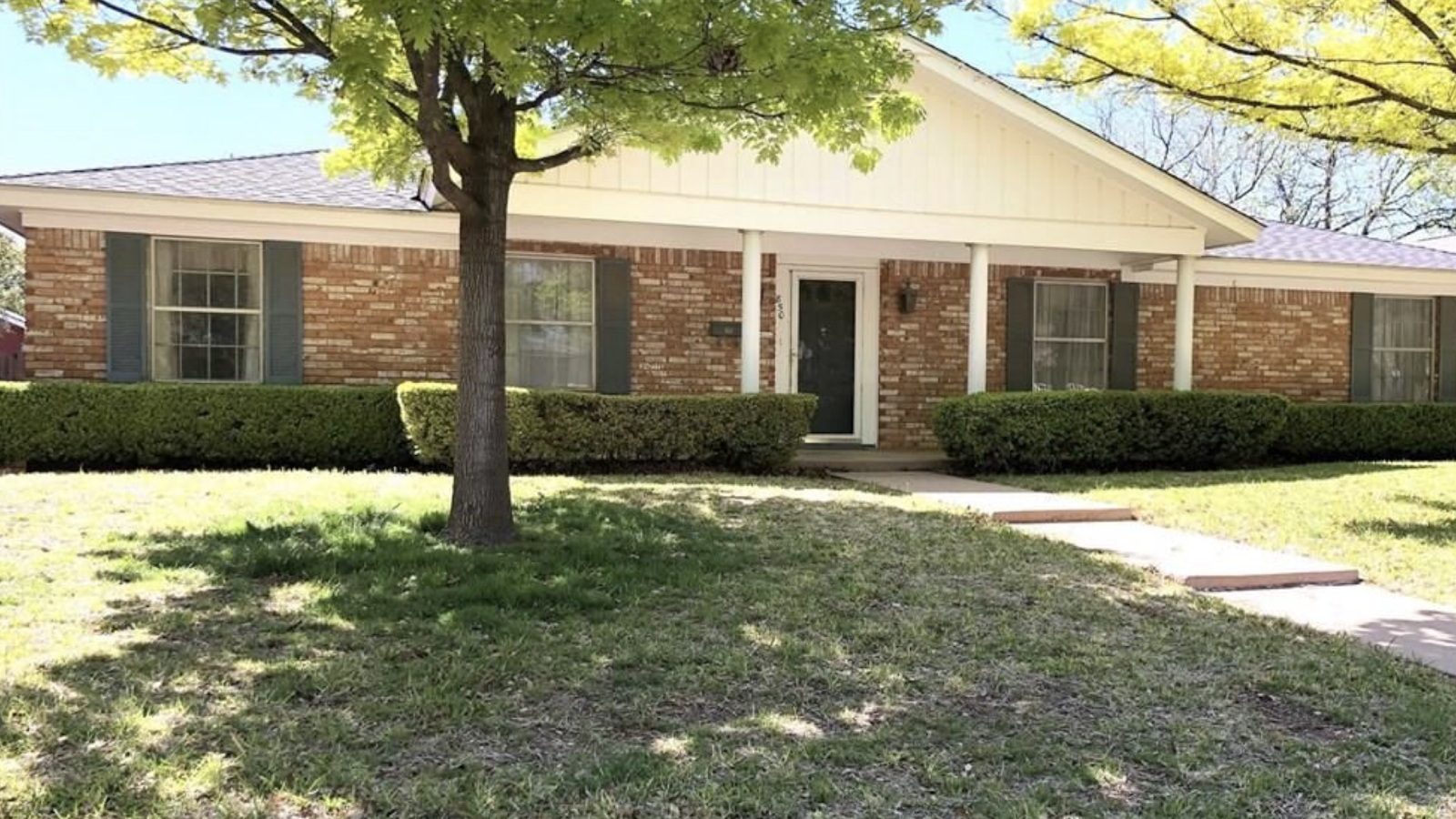
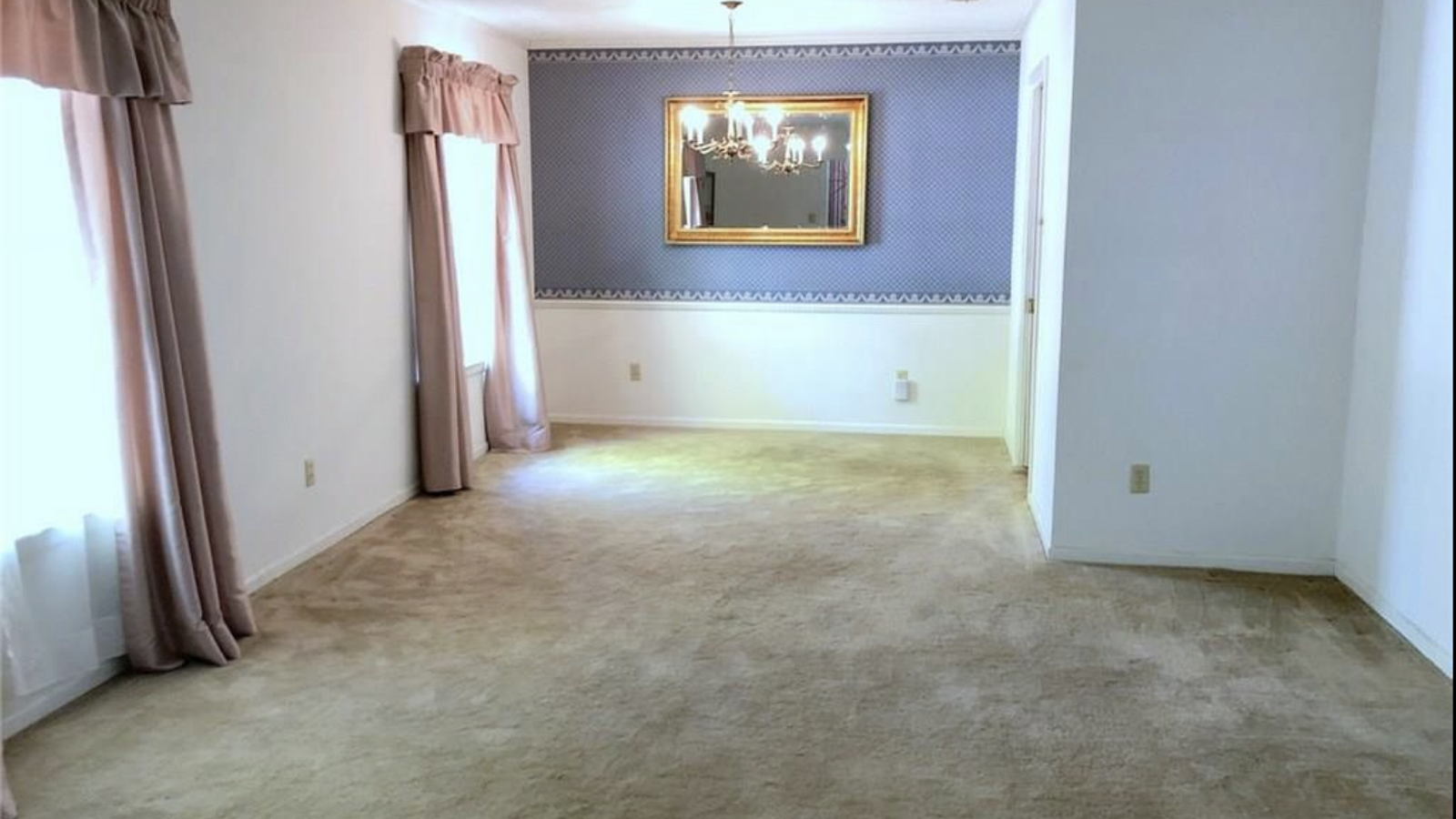
The very nice landlord met us at the door and let us look around. It was several hundred more square feet than our current house, with two living areas, two dining areas, a two car garage, and three bedrooms. He said he was going to get construction in there to convert the formal dining area into a fourth bedroom, but came down on the rent price when we said three bedrooms would be fine for now.


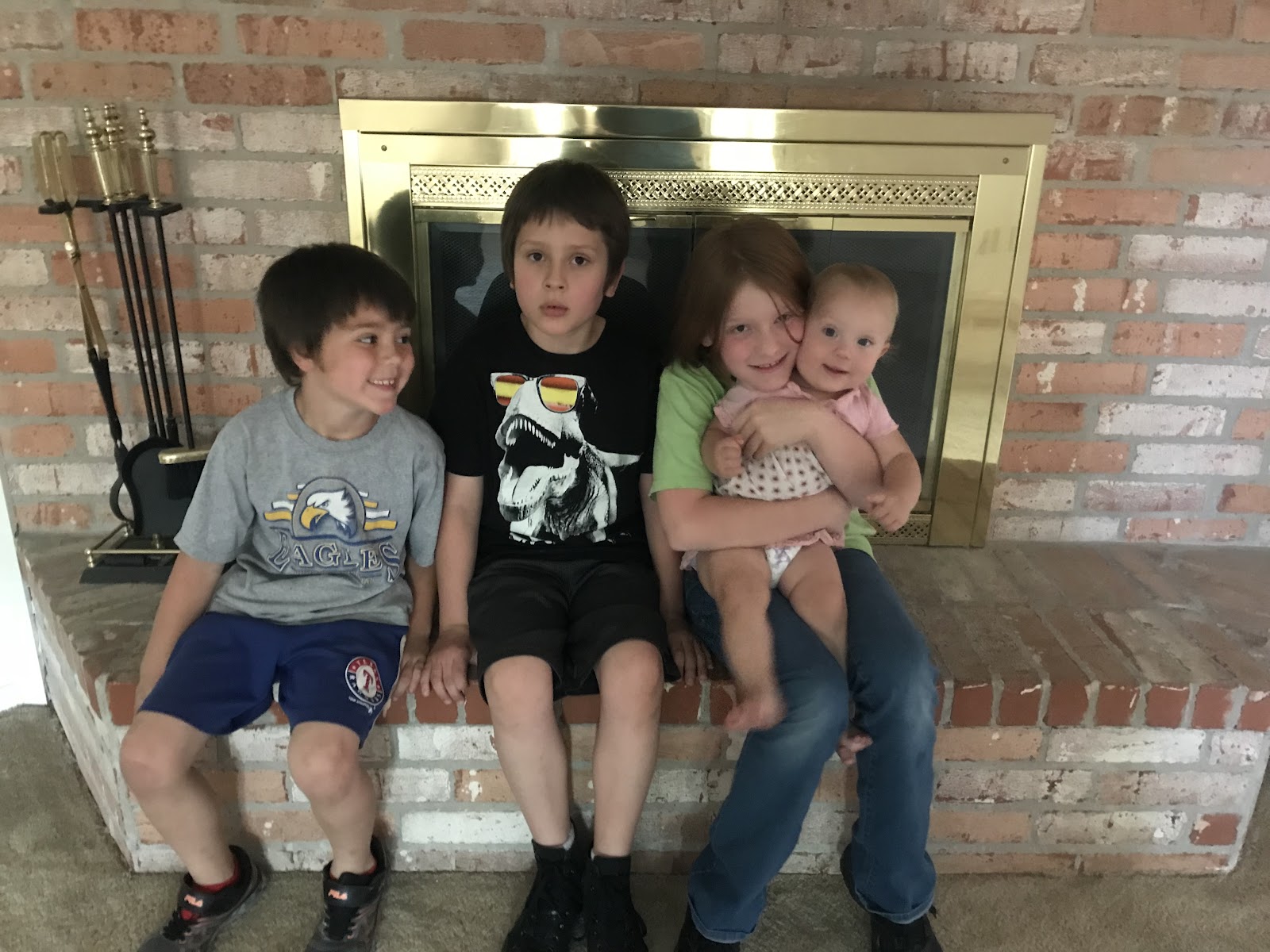
This home sparked my imagination. I could hear in my head my mother-in-law asking, “where would you put your Christmas tree?” Rhonda loves Christmas and that is usually her first question about a new place. I could see our stockings hung from the mantle over the (functional) fireplace, the tree decked out and lit up next to it.


The laundry room has a perfect area for the dog’s bed, and the covered back porch would be the best for Gabriel’s hammock swing. Ben and Emerald would be thrilled they still have pecans to collect and sell to my mother in the winter. The sprinkler system in the front would keep our grass so green and lovely.


And y’all. My closet.

There is more storage places everywhere, for stockpiling the girls’ diabetes supplies and Gabe’s incontinent supplies, for putting away all of these things that right now have no place. There are places I can put all my Christmas decorations.

There’s even a dishwasher!

There are still some considerations we have had to make. Currently, there is no washer and dryer, so we will have to get some. We have two living rooms to fill with furniture but in a parallel to our first apartment, we only have one recliner. We are on the lookout for new seating options. Neither of these things concern us too greatly because they are fixable problems.


I didn’t want to get my hopes up because I loved this house with its soft carpet for Tula to crawl around on and its charming wallpaper and the serenity that envelopes it from all sides.

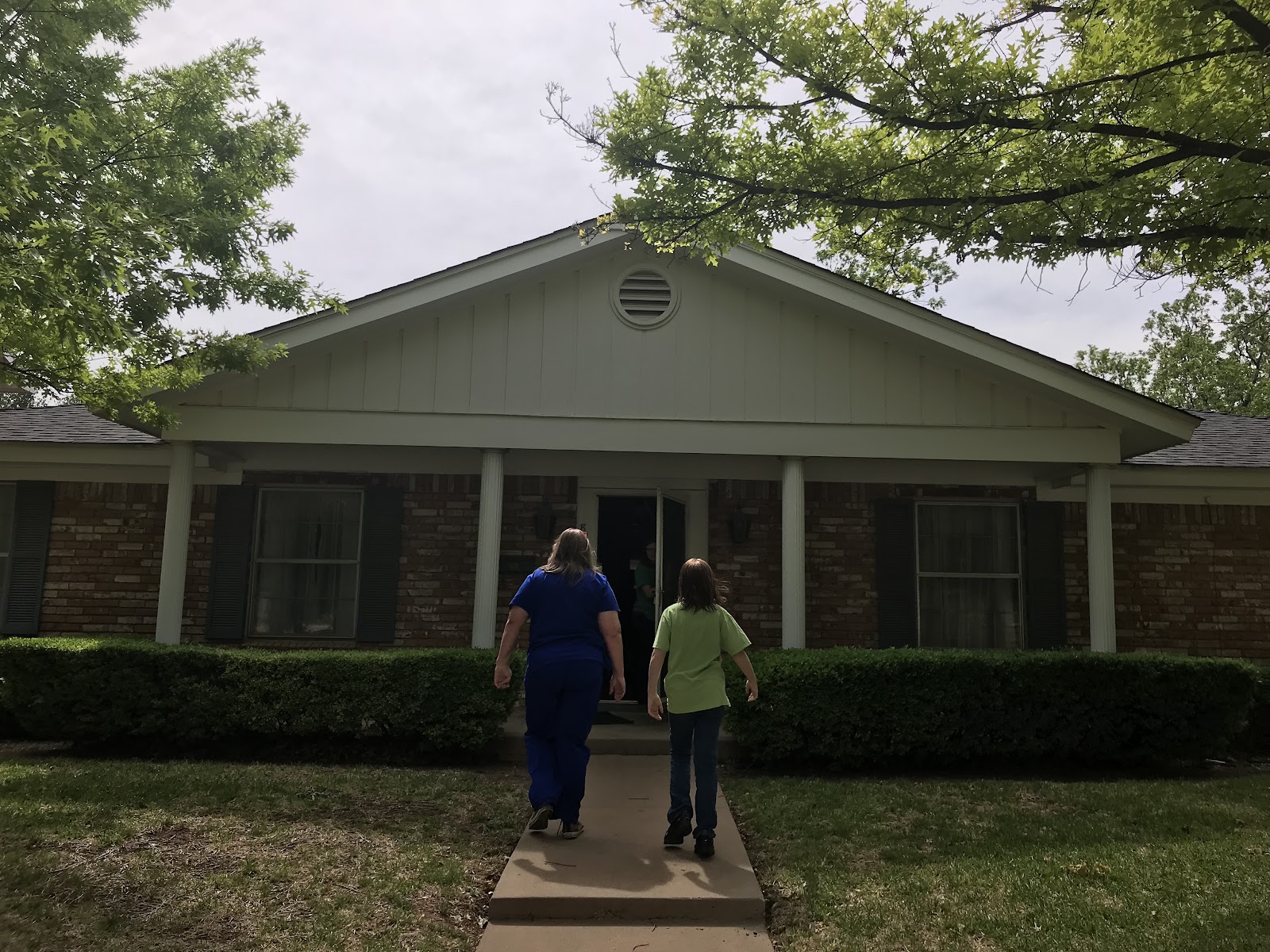
Yesterday, Michael got the keys. Today we started moving in.

And I have not been able to stop grinning.

I got my house!

—Andie—

Thursday, April 19, 2018

Stories

Monday, I did actually write.

My style is very much “stream of consciousness”; I rarely pick a topic and sit down and just type precisely what I intended to say. Which is why I have such difficulty writing anything substantial--there is no structure. I just start and see where it takes me. A lot of the time, it actually works out and I manage to piece together enough coherent thoughts for a blog post. When reaching down deep inside my psyche, usually what comes up is fairly tame in nature.

Occasionally though, what I end up writing is too personal. While I strive for as much transparency here as I feel appropriate, there are obviously some parts of our lives that must remain private. The biggest filter I have to run it through is:

Is this my story to tell?

I am a story collector. I love to hear people talk about their lives, their hopes and dreams and interests. I want to know what makes them the way they are, why they believe as they believe and what brought them there. People are so fascinating, and I enjoy getting to know them better. The interconnectivity that weaves all these individuals together fuels my voracious imagination.

So when I sit down to tell the story of my little family, I have to be conscious and respectful that I only tell my truths, my stories.

Michael is mostly fair game as our lives are often completely inseparable for the last decade plus. I try not to speak directly for him; before I post, I always have him proofread and give approval.

The children are a little trickier because while our stories run so parallel, I do actually want to protect their privacy to a certain extent while still acting as a chronicler of times they are less likely to remember independently. It is a matter I handle with as much delicacy as I feel possible while still conveying the principles I am trying to get across.

There are certain subjects that I feel so little ownership over, even as they relate directly to me and inform great portions of my life, that I have avoided talking about them here or anywhere at all.

My biological father--my mother’s first husband--is one such tale. They divorced when I was younger than Tula, and his appearances in my life were so few and sporadic that most of what I could tell you about him would be gleaned from others’ relayed experiences. What I do remember was not wholly flattering, but I can’t imagine my girlish recollections would be entirely accurate either. I imagine the truth lay somewhere in the middle--not a complete villain, but scarcely a saint either, and (by choice) a pieceplayer in our adventure.

I also cannot be persuaded usually to touch politics with a ten-foot pole, a subject which I feel I have less authority to speak on the more that I learn.

Childhood is mostly fair game, as long as I don’t embarrass my brothers and sister (who, as far as I can tell, are wholly impervious to shame), but I can’t imagine it would be excessively interesting to anyone nor particularly relevant to what is going on now. (Unless you find enjoyment in my embarrassment. I was painfully awkward.)

What I ended up writing earlier this week was based on a prompt I found on the Abilene Writers Guild website: First Love.

The wheels in my head began to spin away as I thought about my first serious boyfriend and how little I understood then about relationships and men in general. I ended up writing quite a lot on the subject, starting with what I was raised to believe about love and dating and puberty and sex. There were so many misconceptions that I had, and that ignorance caused me quite a bit of heartache and trepidation, led me into situations I was ill-equipped to handle.

By the time I had reached the end (or as much as I would be able to get out at the moment), I knew it wasn’t something I would be able to share. It was too personal, too exposing, not for graphic content but because it cut too much to the heart of me. I had to get out into the sunshine and fresh air, drink ice water to loosen the tightness in my chest.

My early relationships were not great in the way that all young relationships suffer. He was not a good boyfriend, I was not a good girlfriend because we didn’t yet know how to be better. It is a practice course where everyone involved only stands to be hurt, but we do it anyway because it’s how you learn. No amount of relationship books I read (looking at you, “Chocolate Chili Pepper Love”) could have prepared me to know what I wanted and needed from a romantic partner like finding out exactly what I didn’t. As much as this story was my own, it also belonged to that hapless boy I knew so long ago, and it didn’t feel right for me to put it out there.

The more I thought about it though, the more I felt the point of the prompt, and the more I really thought about first.

My first date with Michael, we sat on the couch in Katie Rogers dorm because I had sprained my ankle falling down to flights of stairs rushing to meet him. It was swelling and purple and didn’t bother me much because this goofball in a Hawaiian shirt was making me laugh.

The first kiss Michael and I shared was halfway between my dorm and his, with all the stars out and the air was cold so he wrapped me up in his leather coat to keep warm.

The first time Michael and I made dinner at his apartment, we had no utensils except for plastic ones stolen from the school cafeteria. After trying several times to flip bacon with a fork that was rapidly melting, we had to borrow one from the married couple next door. That became the only fork we had when we couldn’t scrape together enough money to buy food, little less household items, so we would share it while we ate the very worst tunaless tuna helper sitting together in the only recliner we owned.


Mila the miniature pinscher was our first pet, this adorable, horrible screech-monster we were in no way ready to take care of. We had to take her back to the pet store because we weren’t supposed to have her in the first place, and Michael held me while I cried.

Our first apartment, which we called The Dank with no trace of irony, whose air conditioner went out every year and perpetually smelled like the tacos we couldn’t afford from the restaurant next door, but we were so proud of because it was just ours.

The first time I saw Michael cry, when he saw the sonogram picture of our little gummy bear baby Emerald.  His eyes may have been misty again the first time he held that red-headed infant in his arms and introduced himself as “daddy”.

When the doors of the church opened, the song “Gaelic Morn swells, and I saw the man that makes me so happy beaming because this is the happiest day of our lives. Michael’s grandfather introduced for the first time as husband and wife.

Michael is the story I chose for myself, my first and true love. His birthday was toward the beginning of the month which we celebrated per his wishes as totally innocuous day without note. He’s not big on people making a fuss over him. Personally, I think he deserves grandiose fanfare everyday, this man that works so hard to provide for his disaster-prone brood. The humor and patience with which he handles our oft-stressful, exhausting, chaotic circumstances gives me the strength and courage to keep going when I want so desperately to give up. All day, I try and do things to make his life easier or to make him happy because he is the best part of my day.

For me, it always comes back to him. When I exhumed all of that yucky, personal junk the other day, all I ended up uncovering was thankfulness for the path God put me on that led me to this goofball I married.

I think that’s the better story anyway.

—Andie

Tuesday, April 17, 2018

Da Mama

So, as promised, here is a little bit more about me, tha mama!

I grew up in a small town, surrounded by family. I have two brothers and a sister, we range in age- (soon to be) 22, 23, 24, and 25. We are very close because of our close ages, and being this far away from them kills me, as I know it kills them. I am obviously the youngest.

In school, I have always been really good at English and History--basically, things involving memory--but have loved the sciences. You can blame my mother for that because she got her degree in microbiology when I was little, and is as big of a nerd as I am. While in high school, I played trombone in the marching band (GEEK), and participated in Literary Critiscm for UIL, as well as volunteering for anything in everything. I was particularly active in my youth group, as well with the charity organizations Teens Living with Cancer and Carter Blood Care.

My dream has always been to be a neurologist, specifically in pediatrics, but unfortunately I have neither the stomach nor the time to invest. Which stinks, because medicine is a big love of mine, and will probably always be. As it is, with a degree in business, and my history with the company, I hope to get a position as a new accounts consultant for the aforementioned Carter Blood Care. I would be doing good work with them, and would still have intimate ties with medicine.

Art has always been a fascination with me as well, and while I am not particularly good at it. I keep working at it though, because talent is a matter of time invested.

Michael says I am super-sensitive and a bleeding heart (which is why he frightens away any stray that gets too close to our house). I love cats so much--probably because we share one big common factor--when we want to be loved on, when we want to be touched, we will initiate it. I am not very cuddly, as it would turn out, and am not a big fan of hugging or kissing anyone but my husband and children. My cats are Remy LaBeau and Oscar de la Renta (I'm weird), and we also own a rat terrier named Pepper Ann Potts. Michael refuses to let me have any more pets unless something "mysteriously" (read--I find new homes for them and they...) disappear.

Monday, April 9, 2018

Wonderful!

Michael and I do this thing that I like to call “mini date”.


Everyone knows how hard it is to get a date when you have kids; it is a well-documented and much-lamented phenomenon. We are no exception particularly because we have so very many children and each child feels like a lot more children than just one because of the nature of their being. There are a handful of people both willing and able to watch our rodent army for a few hours, but opportunities don’t arise too often where we both have the means and the motivation to go out. With this in mind, I have instituted Mini Date.

For five to ten minutes, Michael and I will sit in the car together, sharing a hot pretzel or a soda, and listening to the podcast “Wonderful!”.

If you have not heard of this podcast, it is on Maximum Fun (www.maximumfun.org)--the co-hosts are Rachel and Griffin McElroy, a married couple that talk about things that they love. It is about positivity and it is contagiously joyful and it helps perk you up in the middle of a dreary or frustrating day.

On that format, I was going to talk about a few of the things that I like and that make me happy because it is Monday and Monday is the day that I write. It might not be as interesting to you as it is to me, but hopefully it brings a little bit of positivity to your day, too!

First up: Sun Bears!


My favorite animal are bears--traditionally I like black bears because they are curious and super good, but I go through cycles. Currently in the top spot is a species from Southeast Asia that is one of the smallest bears, only about the size of your average Emerald. Malaysian sun bears, also known as honey bears because they use their strong claws to tear open trees and hives and their extra-long tongues to reach the honey.


Those ridiculous tongues--which range from 7 to 10 inches long--are why they are my current favorite because every picture of them is absolutely, endearingly ridiculous. When they have babies, the mother and father bears may actually live together and co-raise their cubs, which I think is pretty cute.

In general, they are kinda neat, underknown and underappreciated dorks.

The next thing I wanted to talk about was…

Microglia!


Also known as glia or glial cells, neuroglia are support cells that provide protection for neurons. They are my favorite part of the human body, specifically astrocytes (star-shaped cells that, among other functions, provide nutrients to the neurons) and microglia, who are friend-shaped.

The immune system has no business messing around up in the central nervous system, but the brain and spinal cord still need be protected. This is where all the Neuroglia come into effect. Glia actually means “glue”, so neuroglia means “brain glue”. Microglia then means “little glue” which makes no sense, but it is the runtiest of the four types of glial cells. They only make up about 10-15% of all cells found within the brain.

In resting state, they have a little fried-egg shaped body with tendrils going out in all directions, which it uses to monitor the interstitial fluid for signs of trouble. If it senses any inflammation, it sucks in all its tendrils, puffs up (presumably the cellular equivalent of hiking up your britches) and floats around looking for trouble-makers. It could be bacteria or a damaged cell or foreign cells, anything that could be a potential threat.

When it locates the source of trouble, it secrets cytotoxic factors that will reduce the issue to debris, then devours the bits like a deranged and murderous roomba. It has a function called antigen presentation, which is like if your roomba decorated the outside of himself with cheerios and dust bunnies so everyone could see what he had eaten today. Here is a really neat video on the subject if you are interested and want to know more:

https://www.khanacademy.org/science/health-and-medicine/nervous-system-and-sensory-infor/neural-cells-and-neurotransmitters/v/microglia

I just like the idea of this little cell perpetually ready to square up, I guess, but I also think of him as a neat mini shepherd that takes care of his neuron sheep, or miniscule scavenger boys. Their function is not nearly appreciated enough.

I am only going to write about three things today; if this ends up becoming something people enjoy, I may do a semi-regular thing. On to my third thing which is…

Carnations!


When I was in high school, the student council sold carnations as a fundraiser for Valentine’s Day. They were $1 each and different colors meant different things like secret admirer or friend or crush. On Valentine’s Day, class would be interrupted as they delivered individually wrapped flowers. I just loved the way it made the school smell, that delicate and romantic clove-like perfume, and I loved the surprise and joy people had when they realized someone had sent one just for them.

That memory from high school is one of the reasons these are my favorite flowers. Another is I love how they are both beautiful and practical--you can get a dozen for $5 and if you take good care of them, they can last for two to three weeks in the vase.

The name “carnation” could refer to flower garlands, or to” incarnation”, God made flesh. It’s scientific name dianthus means “flower of the gods”. It is one of the oldest cultivated flowers, storied in Christian tradition to have first bloomed where Mary’s tears fell on the road as she watched Jesus carried the cross. This is how they, particularly pink and peach in hue, because associated with motherly love.

Those are my three happyment enducers today; I am thankful that God made long-tongued sun bears, feisty and protective microglia, and delicately durable carnations.

There are so very many wonderful things in the world for us to delight in. I hope your week is full of all such things, and that you get a moment to revel in those good vibes.

—Andie

Thursday, April 5, 2018

Unkind

Writing is how I emotionally work through what is happening in my life. The hope is that by unpacking some of this unpleasant day, I can calm my body and brain enough to sleep. I debated whether or not to identify them by name, but I decided against it--rising above and all that. I will be referring to them as Mrs. A and Mr. B.

It was a hard day today. Some are like that, I know. It felt like every part was a struggle.

Tuesday, there was a city bus stopped picking up passengers on my way home, so I turned down College Drive to pass it. It’s not a street I normally go on; it’s nice and quiet, near where Michael’s department has their supply shop. While I was driving, I saw a sign: “4 bedroom house for rent”.

Normally I avoid phone calls like the plague, doubly so those with strangers. There is this psych metaphor about spoons—you only have so many allotted spoons each day, and each activity takes a certain amount of spoons, which means you can only accomplish so many things in a day. You have to budget your emotional energy resources the same way you budget your finite money. Making a phone call, which seems innocuous, can be daunting because you have so little control over it. For me, it takes too many spoons.

But we need to get into a bigger place, so I figure it is worth a try. Probably going to be more than we can afford anyway. I call and leave a message on the listed phone number.

A little while later, I get a call back. It takes yet more spoons to accept an unexpected phone call from a stranger, but I answer. We visit about the house, size and price, what my family is needing. It is sounding fairly reasonable and she seems nice; she and I work out a time that afternoon for Michael and me to come see the house.

The woman’s husband takes us to see inside. Before we step foot in, Michael tells him that we have two older cats that are non negotiable. We are willing to pay deposits or work out conditions, but the cats come with us, so if they have a no-pets policy, this is not an option. Mr. B says that to get a family as renters, they might be willing to make an exception.

He shows us around the house and it is perfect. It is large and very nice, and comes furnished. All of our furniture is hand-me-downs, things we got free off of Craigslist and Facebook; it would be so nice to have things that aren’t falling apart. It’s a little more than we are spending at our current house, but it is twice as big, with four bedrooms. We are so excited because it has things we have been dreaming about—a dishwasher, a dedicated laundry room, counter space. This is a place we could be comfortable and happy in for a while.


At the end of the tour, Michael asks again about the pets. Mr. B wants to discuss it with his wife, but he thinks we can work something out—they like the idea of our family moving in. It is looking very positive.


We take an application, call our current landlord to ask if he will be a reference. Michael also speaks with a leader from our church whose financial advice we seek often and appreciate; he, too, agrees to be a reference, and says this sounds like a wise move for us. Both of our references are friends with the landlords, both people the couple respect. They have discussed the pet situation and we agree on an additional deposit, plus to pay for the carpet to be cleaned once a year. We are told to bring our application by in the morning and our deposit by the weekend, and we could have the house.

I tell Mom about it and the name of the couple we met with. Her eyes got wide—she knew this woman as they had attended church together in the past. Mom recommends I call Jarrod and talk before we sign any paperwork.

Wednesday morning, Emerald and Tula had doctors appointments with their endocrinologist. Tula had trouble sleeping so I was up a lot of the night before, not at my most mentally sharp. Emerald was moving slow, having to be told multiple times before she would accomplish a task, and it was frustrating me. We drop the application off with Mrs. A and hurry late to the appointment.

Tula was fussy from having not slept well and struggled throughout the double-length appointment. The doctor does not recommend a pump for her, which is disappointing but understandable. She is still in the honeymoon phase of her disease and it can fluctuate too much for a pump to be advisable.


It’s finally over, but we have to go get the girls’ hemoglobin a1c drawn. It’s a blood test they do every three months for their diabetes. Tula, who had finally fallen asleep on the car ride to the lab, was displeased by the needle in her arm. She was shaking all over and sobbing, calling for Daddy as her little arm bruised like a pear. We got through it. Emerald got dropped back off at school and I went home to have lunch with Michael.

Cartoonishly, annoyingly bad, while taking our frozen pizza lunch out of the oven, I drop it topping side down. It’s ruined. To the rescue, Michael ushers me to the car where we have a picnic lunch and listen to a podcast. It was actually lovely.

After I get the kids from school, Mom phones. Mrs. A had called her, which was odd—she was listed as emergency contact, not reference. Mrs. A had mentioned to Mom that she was going to “drop by” and visit with us about the cats because she had other interested parties. I am concerned because we might lose this house we both had liked so much.

I am out in the backyard pulling weeds to take my mind off what a horrible day it was when this woman I met literally met yesterday shows up unannounced and uninvited on my back porch. Emerald didn’t know any better and had let her in. I was so taken off-guard; she hadn’t called, had in no way implied she was coming over to my home, this place that she did not own. Our current landlord wouldn’t have sent her over without calling us; he always alerts us to visitors. Surely Michael wouldn’t have either.

This whole situation has taken spoons I didn’t have left.

This stranger says she has come to meet my cats. I say that they are rather shy and wouldn’t likely come out for people they don’t know, to which is promptly tells me to show her how we have them set up here. She talks and acts like she has a right to be here, like we had set an appointment for me to show her how we store the litter box and where we keep the cat food. Flustered, I show her.

She informs me then that she suddenly remembers that she has a severe cat allergy (which, had I known before, I likely would have discouraged her from entering the house as both cats are now actively rubbing against her legs) and they have other offers so we need to look for another house.

Unless, she leaves the question dangling, I might have the cats put down….?

The sheer amount of horror I felt at that question, I can scarcely describe. I know not everyone cares for cats, and there are quite a few that hate them. But these are my pets. I have raised them for over a decade—they are no kittens, but nor are they feeble and dying animals. They are sweet and gentle boys who spend the entirety of their day laying in warm spots and purring and fulfilling their sole purpose in life: to bring me joy.


And this horrid woman is standing in my bedroom suggesting that I have them killed because she, a stranger, doesn’t like them.


I usher her politely to the door as she continues her idiotic prattering, rattling off excuse after excuse why my nice family with perfect references and impeccable rent history is not a good fit for her rent house. With a mixture of fury and sadness, I shut the door on Mrs. A and text Michael to come home.

Michael calls Mrs. A who refuses to speak to him, just handing the phone promptly to Mr. B who said our landlord did not have kind things to say. Michael firmly but civilly tells him how disappointed we are in how this situation was handled, how they had gone back on their word to us after we agreed to their additional terms. Mr. B apologizes several times.

We contact our landlord who balks—he said they asked three questions.

Did we pay our rent on time?
Yes.

What about the pets?
I have them down as service animals.

Can they come take a look at the house we are in?
That would be up to Andie and Michael.

He talks with us for a while and then again with the couple, getting two different stories. He calls back to reiterate that we have been great tenants and that he said nothing to imply otherwise.

I am absolutely crushed. I feel like a fool. I should have told her it was presumptuous to show up at our house and to go away. I should have called her out on her rudeness.

Michael says the measure of our character is how we act when someone treats us unkindly. He wished them luck in all their future endeavors; I sent them a thank you card for their time. I also wrote this rather grumpy blog post, so I suppose Michael is made up of nicer stuff than I am.

They learned nothing from this, because they don’t see that they did anything wrong. I can’t change that. They have a right to do as they wish with their house. Had they politely called and said that they had reconsidered the cats and it was a no-go, we would have been disappointed but respected that. They could have told us they decided to go a different direction.

Instead, they ambushed me, pushed their way into my home while I was alone with my children. They lied, mislead, and told me to kill my cats, then let me know my family wasn’t good enough for their rent house.

Since she left, I have been cycling through emotions—disappointed, embarrassed, furious, depressed. I am so angry that she would think this was okay, that she had a right to act that way, and even more so that she likely thinks she did the right thing.

I know that God is gently tugging me back toward the path He has set for me; this was not a waypoint the Weardens needed. And I believe with all my heart that what He has planned is going to be so much more amazing than what we are leaving behind. I also recognize that this was a blessing, to see the sort of people these two were before we entered a legal rent agreement and were at their mercy. I shudder to think what liberties this woman would believe herself entitled to if we lived in a property she owned, if she would show this much presumption toward a perfect stranger.

In the end, I respect their right to do as they please with their house, and I understand that cats can be a threat to property in certain situations. Not every landlord wants to take on that responsibility.

I just wish they could have been a little kinder, that’s all.

--Andie

Monday, March 19, 2018

Medicated


I couldn’t think, couldn’t sing, couldn’t write.

It had stolen my ability to be Andie.

I have suffered from depression in one form or another for over ten years. First arriving on the scene as postpartum with the arrival of my strawberried Emerald, it took root in our difficult life circumstances, fed on my up-and-down hormones from four pregnancies, and flourished in autism and diabetes.


With tiny baby Emerald, I should have been suspicious when I told Michael, “I’ve read that some mothers don’t bond with their babies right away, so it’s okay if I don’t love it yet,” by his response:


“She’s already here; can you not call her ‘it’?”


From the thickets, it’s kind of hard to see though. Your body is telling you that you indeed feel this way so obviously you are supposed to feel this way—if it wasn’t a logical reaction, you wouldn’t be having it. It isn’t until you separate yourself through the lens of someone else’s perspective that you start to realize the script is all wrong—this isn’t how your story is supposed to play out.

The analogy that is most often referenced is getting glasses for the first time: you didn’t realize how blurry everything was until it came into focus.


After Benjamin was born, I was sitting at my general practitioner’s, Dr Andy, for my 25 year annual physical. It was my first appointment with him; I was referred by my obstetrician because they were golfing buddies. Michael wanted me to bring up my mood swings in response to an incident we had earlier in the week: We were running behind getting ready to go to church, so I got upset and kicked the high chair across the room. Which apparently was the wrong reaction.


As I sat there, feeling ridiculous because I had a couple of bad days and Dr Google over here was diagnosing me with depression, and the doctor is going to think I’m an idiot, why am I even here, this is stupid, stupid. Tears are in my eyes and my throat is sore because I am not going to cry again and make a fool of myself, and I’m just so, so angry and I don’t know why. I am absolutely furious, fuming, sitting there on the examination table all by myself and there is no reason.


This isn’t what depression was advertised as. You envision sadness, not anger. Thoughts of suicide. I didn’t want to kill myself. That would have taken way more energy than I had available, and I couldn’t see hurting myself. At night when I closed my eyes for the briefest moment, I would wish I wouldn’t wake up. I didn’t want to die, but living was so hard, and death sounded so...peaceful.

Dr Andy explained that depression wasn’t just sadness; it was all the emotions, right under the skin, ready to fly out before we could stop them.

He prescribed Celexa (citalopram) for depression, Elavil (amitriptyline) for anxiety.

The first week, I was euphoric. Not because the medicine had such a profound impact on me, but because I was so optimistic—we had identified the problem and there was a solution! I wasn’t a cold, hateful mother; it was a biological issue. The medicine was going to help, I could feel it in my bones.

The second and third week felt like I had been cruising down the highway going 80 miles per hour and someone had thrown the parking brake. Instead of my emotions feeling right under my skin, it felt like I carried them overflowing in my arms—in any given situation, I had to frantically sort through and figure out what exactly I was supposed to be feeling, experiencing every emotion at once in a confused and upsetting state.

After about a month and a half, everything evened out and we got on kind of a system. Weekdays, I’d put Gabe on the bus to PPCD, drop Emerald off at preschool, and go home to put baby Benjamin down for nap. While he was sleeping, I would take my two little “happy” pills and hope nobody needed me for an hour because I would be too dizzy to drive. I’d lay on the couch feeling like I was rolling somersaults; then it would pass and the rest of the day would be pleasantly tepid.

It felt like the colors had been scaled down on my life. I was no longer seeing red furious or blue sadness, but I wasn’t laughing and joyous either.

After hurting for so long, the mediocrity of okay days was paradise. 


I stayed on the two meds for a couple of years until I moved to Abilene and got a new doctor, one that reacted with horror when he saw the amount of serotonin-affecting medicine I was on. He had me drop the Elavil and cut my Celexa dose by half.

The new regimen lasted about a year. During that time, I slept whenever I could get away with it. I was a perfectly pleasant (for the most part) individual, perpetually living between nap times. What drew me up short, what made me question the medicine I was on, was when someone asked me what I did for fun and I realized:

I can’t name one thing I enjoy.

I’m a person of superlatives—I have a favorite in every category, just go on and ask me. But during that time, I couldn’t think of anything that brought me pleasure. It felt like I was doing things because I had done them before, things like watching cooking shows and reading, but there was no satisfaction, no emotional connection, just an automated response.

With depression, my chest ached remembering things I had once enjoyed, longing to recapture that experience. I’d get a plate of TGIF hot wings—my favorite, with the crispy outside and the buttery, spicy sauce—and will it to taste as good as I remembered, but it never did. I’d get dressed up and go out on dates but no matter how much I put on my “happy” costume, I couldn’t make my insides reflect out.

The treatment, the antidepressant, though...it felt like the candle inside me had been blown out.

If my favorite show was on, I wouldn’t look up once until the credits were rolling and realize I hadn’t heard a word. I would sit down my favorite meal and taste nothing before the food was gone.

My mind felt like a yawning, wind-filled cavern where placidity reigned supreme. I couldn’t think. Couldn’t sing. Couldn’t write.

Antidepressants had stolen my ability to be Andie. 


For a brief while, I switched to Wellbutrin to see if it was the specific med that was causing the issue, but it was an emotional cataclysm and I couldn’t finish the initial 6 week course. I talked to my doctor again, noting that my youngest child was then four years old, so the underlying issue—postpartum depression—had likely passed its course. I had ridden the wave of celexa through the last storm, but now it was time for the clouds to part and let us evaluate what was left to work with.

It was hard to wean me off because I was on such a low dose to begin with, but gradually I got to the point that my system was clearing out. There was a significant period of adjustment, a time in which Michael and my mother asked repeatedly if I thought this was a wise choice (with the heavy implication that they disagreed with this course of action). To ease the transition, I started going to counseling to learn coping mechanisms.

Three main strategies emerged successfully for me:

The first was my lists. I made a list of the minimum I was allowed to get done each day. Eat healthy, Drink Water, Do something enjoyable. If I accomplished nothing else that day, then I could say I tried to take care of myself, which was a start.

The second was taking time for myself. Twice a day—once before Michael left for work and the second after dinner—I would go for a run. It was 90 plus degree weather and I loved it because I could blast my heavy metal music and not talk to anyone or socialize with anyone for a half an hour or more. It was just me.


The last was my “Thought Vomit” journal.

My counselor had recommended a mindfulness program. He said thoughts are like leaves in the stream; we can watch them pass by; we acknowledge they are there, we hear them, and we let them pass. If we don’t hear the thoughts, they’ll just keep repeating until we do, so acknowledge them.

My homework every week was to write down what I was thinking for 15 minutes every day. Just write. It’s a different process to write than to speak or to think; it feels so much more actionable. I would find a spot, usually not long before bed, and I would write down everything I was thinking—every emotion I was feeling, every song I had stuck in my head, every complaint and every praise and everything, like a grand purge until there was nothing left.

Emptiness not like the one caused by Celexa, which felt like a desert with friends hiding where I could not see them, but an oasis where nothing was happening, no one was moving, and I could just be at peace.

I spent a year getting reacquainted with myself, remembering what brought me joy and satisfaction outside of being a wife and a mother. Lemonheads, Tim Burton movies, the dark and macabre, but also sunlight and dancing and Jude Deveraux. I liked things that were powerful evocators, things that demanded a reaction. Joy was something I had missed for so long and wanted to spend as much time in as possible, but I rediscovered things I did not like as well: loud noises, big crowds, being late, messes. It reminded me of what it took to take care of myself.

Toward the end of my pregnancy with Tula, the depression took hold again. I was snapping at the kids, taking four baths a day, just waiting. Waiting to feel better. Waiting for happiness to come back. Three weeks postpartum, having cried every day because of change in routine or unexpected events or delays, I started on a low dose of Zoloft (Setraline). I was dizzy at first, but then it just ran quietly in the background. It felt like it was gently nudging me away from the darker thoughts, away from spiraling into a panic attacks. It was a little platform that held my emotions up until I could take over again on my own.

Sometimes I felt weak or foolish for needing medicine, for not being able to handle it. I felt like I was supposed to be coping better.

When I was feeling kinder, I knew that just as Gabriel took medicine to control the symptoms of his autism and Emerald took insulin to manage her diabetes, I needed support, too. It wasn’t a matter of my ability, but a physiological disruption that had to be corrected. Taking action was coping. 

I still have bad days. Thursday was a bad day. Gabriel ruined my coffee, drank the back-up; Emerald and Benjamin would not stop fighting and I burned only dinner to complete inedibility. We were supposed to play a game as a family but my dour mood had soured it for everybody. That day, I didn’t cope so well. Spending that time learning how to care for myself, satiate my emotional needs, taught me though: it is okay to have a bad day, because tomorrow will be better.

I know how to make it better.

—Andie